
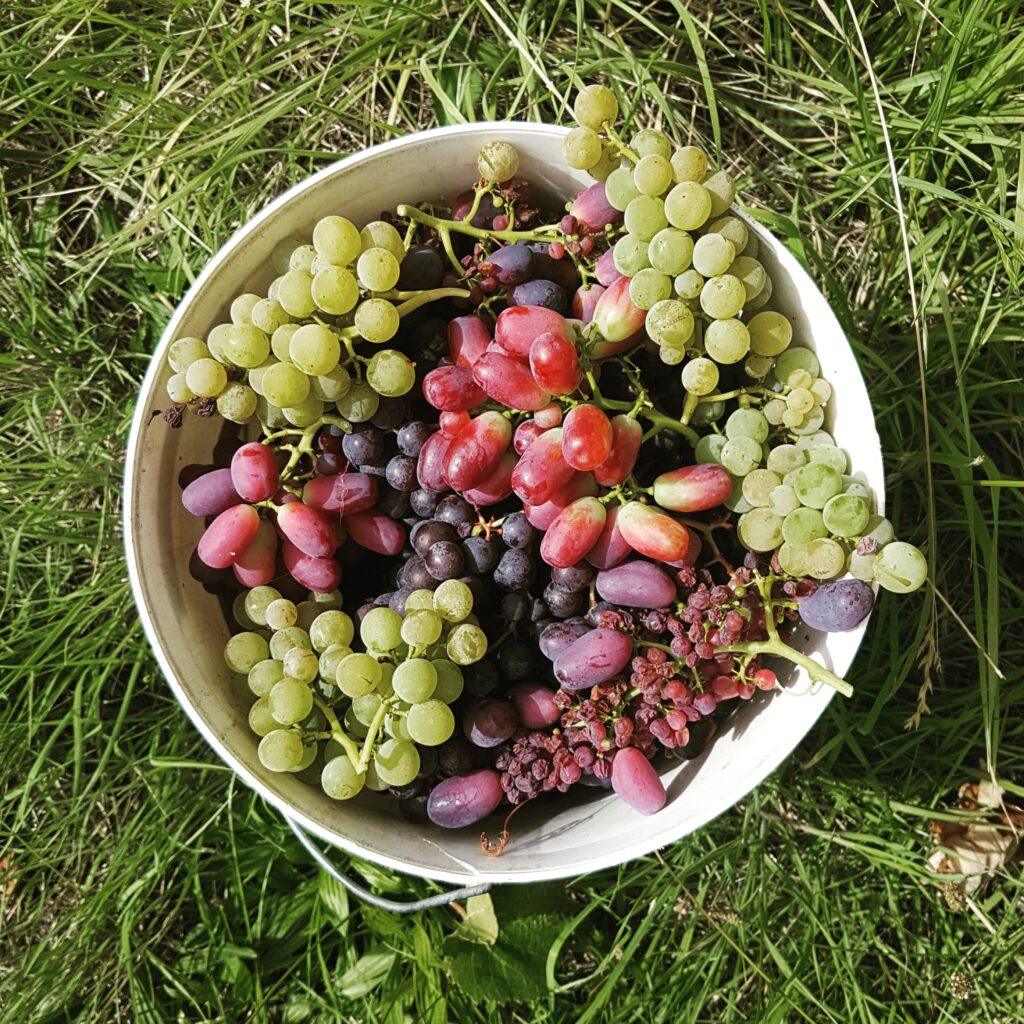
Our approach to wine-growing is all about the vineyard.
Conscientious farming with fresh, balanced fruit and expression of site.
Vineyards are leased and managed, rather than fruit simply being purchased.
Organic and sustainable practices are employed.
Attention to detail, vigilance and a soft hand.

We currently source fruit from six vineyards that we lease or oversee.

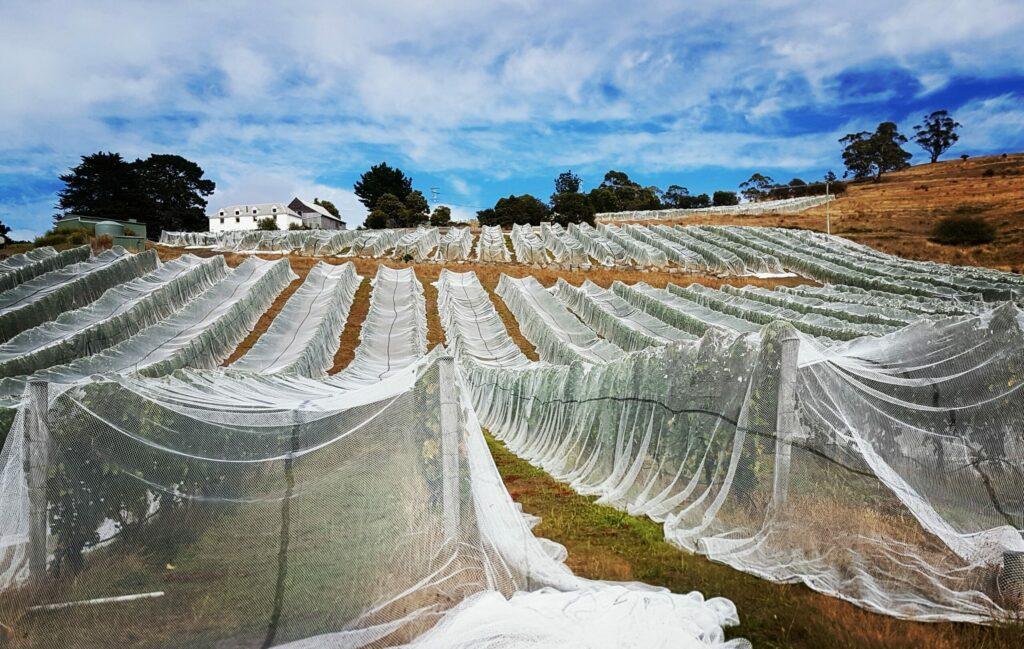
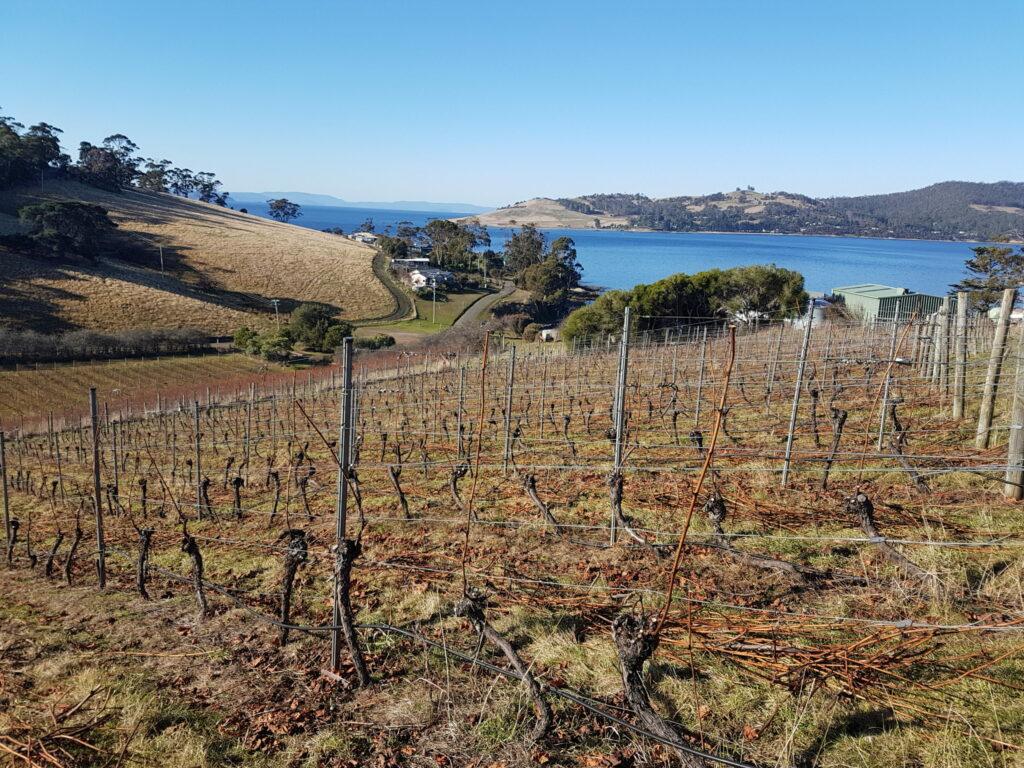
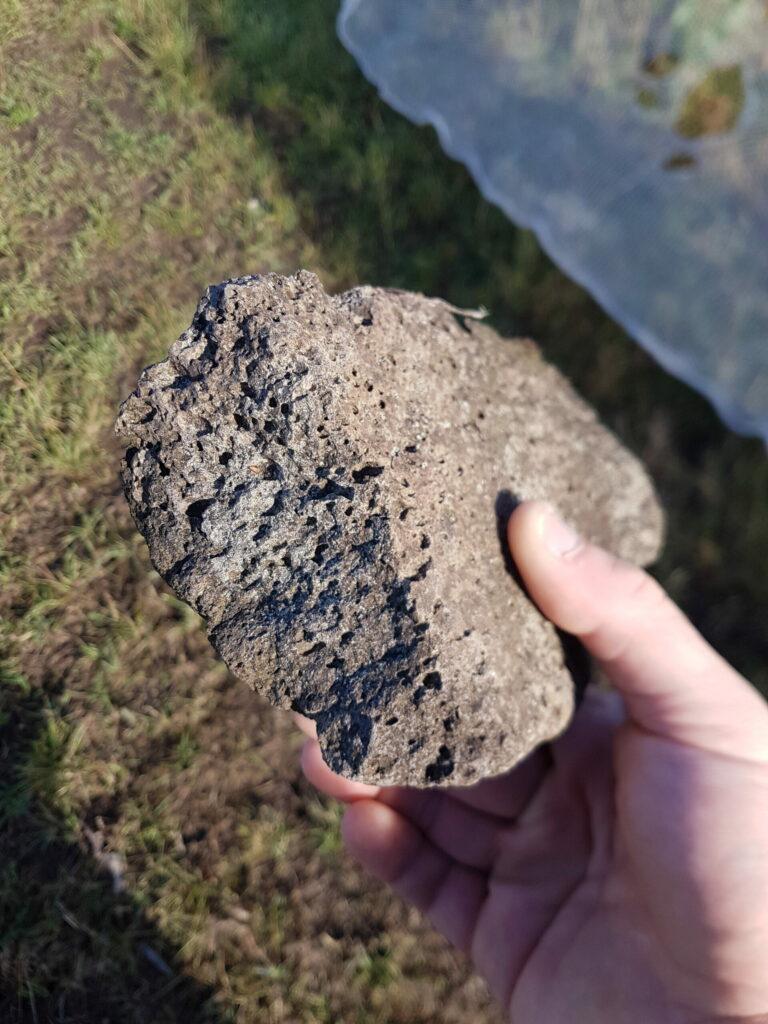
Planted by Liz McGown in 1993, the 2ha Tinderbox Vineyard is planted mainly to Pinot Noir, with a very small portion of Riesling and Chardonnay. The steep north-east aspect sits atop a fascinating geology of Triassic sandstone and vesicular basalt. The breathtaking Tinderbox Vineyard is perched at the entrance to the d’Entrecasteaux Channel, with sweeping views across to Bruny Island and Storm Bay.

The 15ha Clarence House Vineyard, first planted by David Kilpatrick in 1998, boasts several different white and red grape varieties that affords opportunities for both interesting co-ferments (our Field) and single varietal offerings. The rolling, undulating site has soils primarily derived from Jurassic dolerite and basalt. Positioned in the foothills of Mt Rumney, Clarence lies in a small corridor between the Knopwood Hills and Meehan Range, located between Hobart and the Coal Valley.

Established in 2003 by Mark Hooper, the 1ha Windrush Vineyard is planted entirely to Pinot Noir with a mix of different clones. Located on the fringes of suburbia 10min south of Hobart, the elevated site on Mount Pleasant enjoys vast panoramic views of kunanyi (Mt Wellington), South Arm & Bruny Island. The vineyard is dry farmed thanks to deep red volcanic soils rich in olivine basalt.

Alec Harper and Peta Elliot planted the tiny Cornwall Vineyard entirely to Pinot Noir in 1998. Perched off the valley floor on a steep slope in the foothills of the Meehan Range, the east-facing vineyard enjoys gorgeous views across the Coal River. The site is located on a fractured boundary of fluviolacustrine sandstone and mudstone with substantial surface rock.

The Otago Bay Vineyard, situated on the Lower Derwent River, was planted by Michael Crisp in 2002. The small, incredibly picturesque vineyard faces west, with equal plantings of Pinot Noir and Pinot Gris. The vineyard looks out towards Mount Faulkner and Mount Dromedary, established on lithic sandstone and siltstone soils rich in quartz with plant fossils present on some specimens.

Originally planted by the Richardson family in 1991, the 1ha Observatory Hill Vineyard faces north-east and is planted to a mix of five different grape varieties: Pinot Noir, Pinot Gris, Riesling, Chardonnay & Sauvignon Blanc. Located in the same area as Clarence House (in the foothills of Mount Rumney), the soils are markedly different, instead derived from Permian siltstone and mudstone.

Our approach to wine-growing is all about the vineyard.
Conscientious farming with fresh, balanced fruit and expression of site.
Vineyards are leased and managed, rather than fruit simply being purchased.
Organic and sustainable practices are employed.
Attention to detail, vigilance and a soft hand.

We currently source fruit from six vineyards that we lease or oversee.

Planted by Liz McGown in 1993, the 2ha Tinderbox Vineyard is planted mainly to Pinot Noir, with a very small portion of Riesling and Chardonnay. The steep north-east aspect sits atop a fascinating geology of Triassic sandstone and vesicular basalt. The breathtaking Tinderbox Vineyard is perched at the entrance to the d’Entrecasteaux Channel, with sweeping views across to Bruny Island and Storm Bay.

The 15ha Clarence House Vineyard, first planted by David Kilpatrick in 1998, boasts several different white and red grape varieties that affords opportunities for both interesting co-ferments (our Field) and single varietal offerings. The rolling, undulating site has soils primarily derived from Jurassic dolerite and basalt. Positioned in the foothills of Mt Rumney, Clarence lies in a small corridor between the Knopwood Hills and Meehan Range, located between Hobart and the Coal Valley.

Established in 2003 by Mark Hooper, the 1ha Windrush Vineyard is planted entirely to Pinot Noir with a mix of different clones. Located on the fringes of suburbia 10min south of Hobart, the elevated site on Mount Pleasant enjoys vast panoramic views of kunanyi (Mt Wellington), South Arm & Bruny Island. The vineyard is dry farmed thanks to deep red volcanic soils rich in olivine basalt.

Alec Harper and Peta Elliot planted the tiny Cornwall Vineyard entirely to Pinot Noir in 1998. Perched off the valley floor on a steep slope in the foothills of the Meehan Range, the east-facing vineyard enjoys gorgeous views across the Coal River. The site is located on a fractured boundary of fluviolacustrine sandstone and mudstone with substantial surface rock.

The Otago Bay Vineyard, situated on the Lower Derwent River, was planted by Michael Crisp in 2002. The small, incredibly picturesque vineyard faces west, with equal plantings of Pinot Noir and Pinot Gris. The vineyard looks out towards Mount Faulkner and Mount Dromedary, established on lithic sandstone and siltstone soils rich in quartz with plant fossils present on some specimens.

Originally planted by the Richardson family in 1991, the 1ha Observatory Hill Vineyard faces north-east and is planted to a mix of five different grape varieties: Pinot Noir, Pinot Gris, Riesling, Chardonnay & Sauvignon Blanc. Located in the same area as Clarence House (in the foothills of Mount Rumney), the soils are markedly different, instead derived from Permian siltstone and mudstone.